
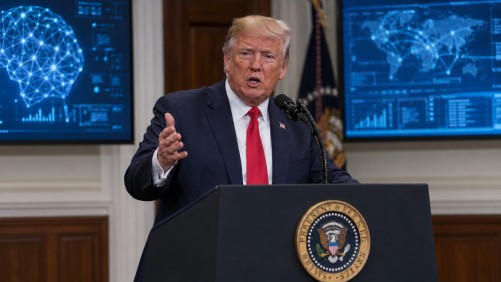
In a move to address the burgeoning challenges and opportunities presented by artificial intelligence, former President Donald Trump has announced plans to establish an “AI Force” and appoint an AI czar. The initiative is aimed at monitoring the rapid development of AI technologies while addressing growing concerns about their potential risks.
Trump likened the proposed AI Force to the U.S. Space Force, though he provided limited details regarding its specific structure, responsibilities, or timeline. The announcement comes amidst increasing pressure on governments and tech leaders to tackle AI-related risks without hindering innovation in the sector.
The former president has previously voiced opposition to stringent AI regulations, citing fears that such measures could slow U.S. innovation and allow China to gain a competitive edge. In a recent social media post, Trump characterized concerns over AI as overstated and emphasized that his administration would not impede the industry’s growth. He suggested that existing legal frameworks could address any harmful actions resulting from AI misuse.
Trump has consistently framed AI as a pivotal economic transformation, highlighting its potential impact on the American economy. He has also underscored the importance of maintaining U.S. leadership over China in the AI sector. This announcement arrives in the broader context of an international debate over AI safety, with technology experts calling for increased caution as AI systems grow more autonomous.
The federal initiative proposed by Trump follows California Governor Gavin Newsom’s recent announcement about forming a panel dedicated to AI safety regulations. This panel aims to explore mechanisms for disabling AI systems that may deviate from their intended functions. Additionally, several Republican figures, including Florida Governor Ron DeSantis and Utah Governor Spencer Cox, have advocated for enhanced AI oversight and measures to restrict advanced technology transfers to China.
Trump’s announcement highlights the intensifying policy discussions in the United States about balancing AI innovation, economic competition, and public safety, as the technology continues to evolve rapidly.