
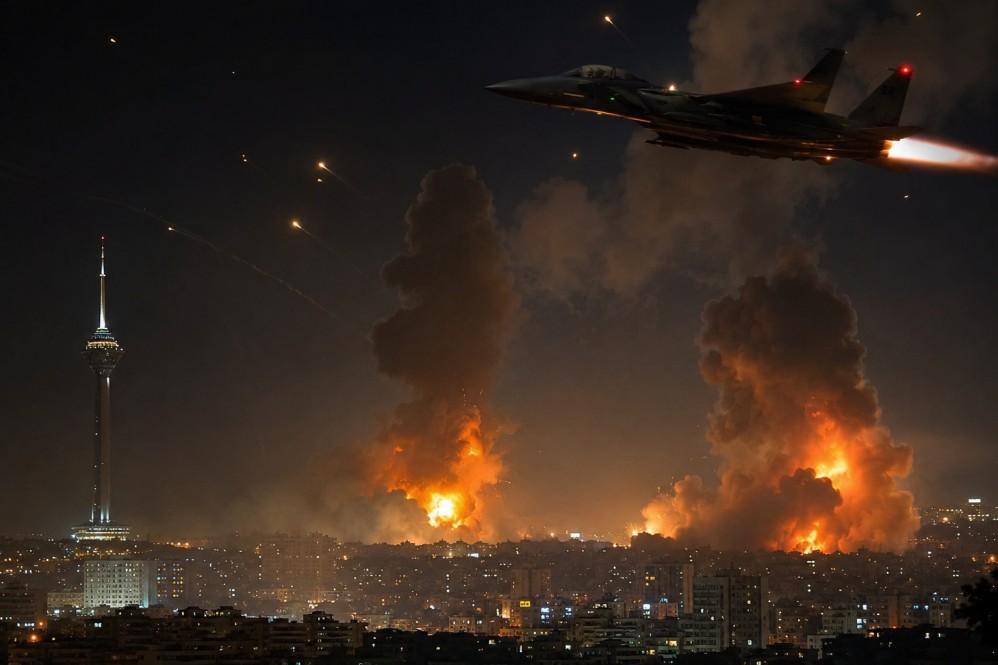
The United States has launched airstrikes against Iran for the third night in a row, as President Donald Trump announced plans to impose a maritime blockade on the country. Additionally, he revealed a new 20% tariff on cargo passing through the Strait of Hormuz, which will be secured under US-controlled measures. The US Central Command stated that these military actions are designed to diminish Iran’s military strength and prevent any attacks on commercial vessels and civilians in this crucial maritime route.
President Trump affirmed that military operations against Iran would persist, emphasizing the United States’ commitment to maintaining security control over the strait. This decision comes after reports indicated that Iranian cruise missiles targeted two oil tankers from the UAE in Omani waters, resulting in the death of an Indian crew member and injuring several others. Such developments have caused Brent crude oil prices to surge by nearly 8% due to heightened fears regarding global energy supply disruptions.
In response to the proposed blockade, Iran has condemned the US actions, accusing Washington of jeopardizing international energy security. Iranian officials warned of a strong reaction to any attempts to restrict their maritime access. Meanwhile, international maritime authorities have pointed out that imposing mandatory transit fees in international waterways lacks legal standing under current international law.
The escalating military tensions have sparked concerns of a broader regional conflict. The continuous attacks in the region have disrupted shipping activities, driven up oil prices, and injected a sense of uncertainty into the global economy. As the situation develops, the potential for further destabilization in an already volatile area raises significant alarm among the international community.