
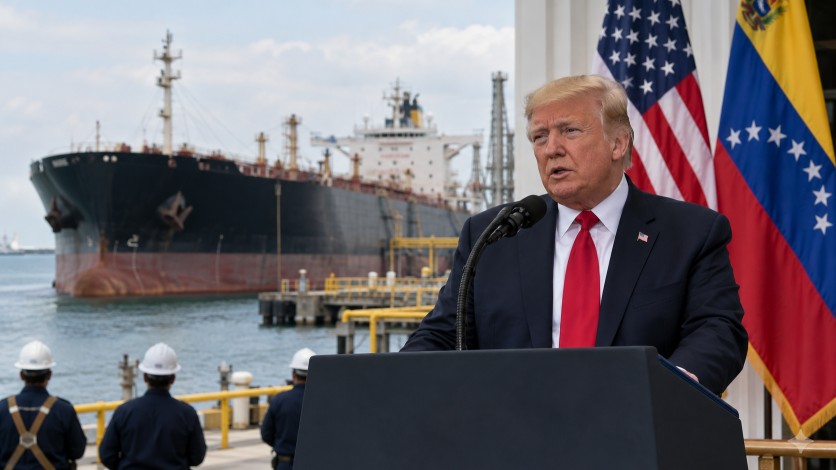
US President Donald Trump has announced a new oil agreement with Venezuela, highlighting it as a significant achievement for American energy policy. During a campaign rally in Corpus Christi, Texas, Trump pointed to an oil tanker off the coast, stating it was carrying one million barrels of Venezuelan oil, part of a deal he described as a major victory that would not cost American taxpayers.
Trump also suggested the possibility of Venezuela becoming the 51st state of the United States, claiming that the country could achieve prosperity under this new arrangement. The agreement was made with Venezuela’s interim government following a US military operation in January that led to the capture of former President Nicolás Maduro, who is now facing criminal charges in New York.
The President emphasized that this deal would bolster US energy dominance and potentially lower domestic fuel prices, which have been rising due to ongoing conflicts with Iran and disruptions in global oil supplies. These tensions have particularly affected oil shipments through the Strait of Hormuz, a vital route for global oil distribution.
However, the agreement has sparked criticism, with some arguing that the US administration is prioritizing access to Venezuelan oil over fostering a democratic transition in the country. Since Maduro’s detention, Venezuela has not conducted elections, raising concerns about its political future.
While Trump promotes the Venezuelan oil agreement as a cornerstone of his energy strategy, questions linger regarding its long-term economic impacts and whether it will achieve the promised reduction in fuel prices in the United States. The debate continues over the broader implications for Venezuela’s governance and stability.