
The United States has influenced a series of withdrawals from a European conference on disinformation, which is taking place in Vilnius, Lithuania on October 7 and 8, after raising concerns about a panel discussion. The conference, titled #Disinfo2026, includes researchers, journalists, technology experts, and policymakers addressing issues of disinformation and information manipulation.
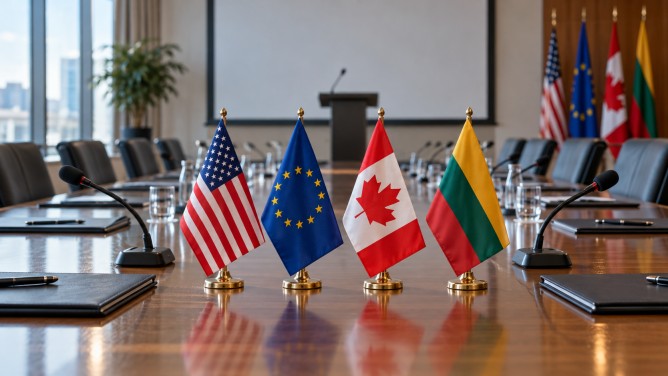
Lithuania, Canada, and the European Union (EU) retracted their official support for the event following interactions with US officials regarding the conference’s agenda. The Lithuanian Foreign Ministry, Canada’s Global Affairs department, and the European External Action Service removed their logos from the list of event supporters. Lithuania cited that some aspects of the conference did not align with its official stance, while Canada adjusted its participation due to changes in the framing of several panel discussions, although Canadian officials still attended the event. The EU also pulled its official backing, stating that certain discussions conflicted with its positions, yet it continued to fund the conference.
The contentious issue revolved around a panel considering the United States as a potential foreign information manipulation and interference threat. This session aimed to explore how European organizations might independently respond to information threats. The situation has sparked debates on balancing the fight against disinformation with the freedom to critique government actions.
Despite these withdrawals, France maintained its endorsement of the conference, emphasizing the importance of engaging with civil society to shape European disinformation policies. The developments underscore growing differences among Western countries regarding the definition of foreign information threats and the response to government criticism within international forums.