
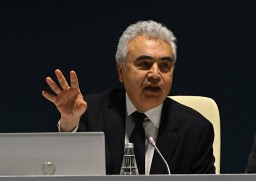
Decades of painstaking progress toward greater global energy market stability have been shattered by the Iran war in a matter of weeks, the head of the International Energy Agency has warned. Fatih Birol, speaking in Canberra, said the market stability and supply security that had been carefully built since the 1970s oil shocks was being dismantled at extraordinary speed by the current conflict. He described the overall crisis as equivalent to the combined force of those twin 1970s oil shocks and the Ukraine gas emergency happening simultaneously.
Birol said the world had spent the decades since 1973 building strategic reserves, diversifying supply sources, developing new production regions, and creating international coordination mechanisms — all specifically designed to prevent a repeat of the supply catastrophes of the 1970s. The Iran crisis had demonstrated that while this progress had reduced vulnerability, it had not eliminated it, and that a sufficiently large geopolitical shock could still overwhelm the defenses that had been built.
The conflict began February 28 with US and Israeli strikes on Iran and has since removed 11 million barrels of oil per day and 140 billion cubic metres of gas from world markets. At least 40 Gulf energy assets have been severely damaged, and the Hormuz strait — through which approximately 20 percent of global oil flows — remains closed. The IEA deployed 400 million barrels from strategic reserves on March 11 in its largest emergency action.
Birol confirmed further releases were under consideration and said consultations with governments across three continents were ongoing. He called for demand-side policies including remote work, lower speed limits, and reduced air travel. He met with Australian Prime Minister Anthony Albanese and said rebuilding the stability that the crisis had shattered would require sustained investment and cooperation.
Trump’s 48-hour ultimatum to Iran to reopen the strait expired without result, and Tehran threatened retaliatory strikes on US and allied energy and water infrastructure. Birol concluded that the decades of progress toward energy market stability, while now severely set back, had not been meaningless — they had prevented the current crisis from being even worse. But the work of rebuilding that stability, and making it more durable, now needed to begin immediately and with the full commitment of the international community.