
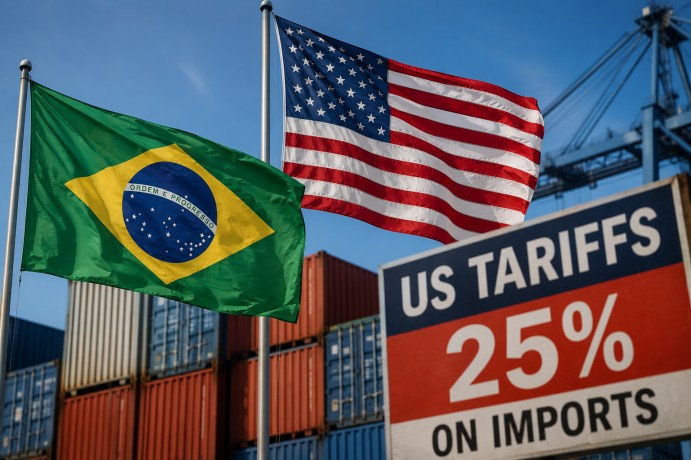
The Brazilian government has sharply criticized the United States for its decision to impose a 25% tariff on certain Brazilian goods starting July 22, labeling the action as unjustified. Brazil has firmly rejected the U.S. claims of unfair trade practices, asserting through an official statement that it does not engage in such practices and opposes the newly announced tariff measures.
The tariffs will target specific Brazilian imports, although the U.S. has chosen to exempt several key products from these duties, such as coffee, beef, oranges, orange juice, certain oil and gas products, and aerospace components. This decision aims to prevent disruptions in supply chains. Despite the exemptions, the U.S. Trade Representative has justified the tariffs by citing an investigation that allegedly found Brazil guilty of unfair trade practices, including inadequate anti-corruption enforcement and other unreasonable trade policies.
According to U.S. officials, the tariffs are designed to level the playing field, ensuring fair competition for American businesses and workers. However, they also noted that the door remains open for negotiations with Brazil, indicating a willingness to resolve the trade dispute through dialogue.
In the political arena, U.S. Secretary of State Marco Rubio has accused President Luiz Inácio Lula da Silva’s administration of not negotiating in good faith. He claimed that Brazil’s economic policies have adversely impacted both American and Brazilian interests.
Despite these accusations, Brazil stands firm in its opposition to the tariff measures and continues to reject the assertions made by U.S. officials regarding its trade practices. The situation remains tense as both nations navigate the complex landscape of international trade relations.