
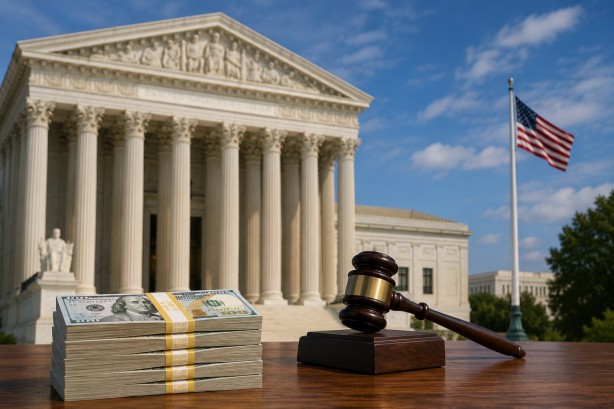
The United States government has issued $81 billion in tariff refunds to businesses following a Supreme Court decision that found many of former President Donald Trump’s tariff policies were illegally implemented. This substantial refund, distributed in the current fiscal year, marks a significant jump from the $5 billion returned in the same period last year. The court’s ruling compelled the government to reimburse companies that had been subjected to import duties under the now-invalid tariffs, with most of the repayments occurring in May and June as indicated by Treasury budget data.
This surge in refunds has contributed to the growing federal budget deficit, which hit $1.367 trillion in the first nine months of the fiscal year. The deficit has been further exacerbated by increased interest payments on the national debt and rising military expenditures. These financial strains continue to challenge the government’s fiscal management as it navigates complex economic conditions.
Despite the Supreme Court’s ruling, the Trump administration is moving forward with plans for a new series of tariffs. These proposed measures are aimed at addressing issues such as trade practices, industrial overcapacity, and the enforcement of anti-forced labor laws. The proposed tariff rates are anticipated to be between 10% and 12.5%, with additional duties being considered for several of the United States’ significant trading partners.
The decision to refund such a large sum has significant implications for both the businesses who received these funds and the broader economic landscape. While businesses benefit from the returned tariffs, the federal government’s financial obligations increase, highlighting the complex interplay between trade policy and fiscal responsibility.