
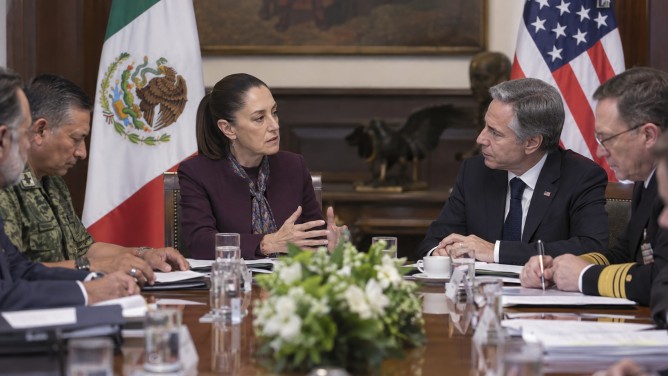
Mexico is enhancing its security collaboration with the United States under President Claudia Sheinbaum, marking a significant shift from the strained ties during former President Andrés Manuel López Obrador’s tenure. Key to this renewed partnership is Security Cabinet coordinator Omar García Harfuch, who has been instrumental in facilitating meetings with top U.S. officials. These discussions have focused on intelligence sharing and tackling organized crime, leading to quicker responses to criminal activities due to more rapid information exchanges.
Under Sheinbaum’s leadership, Mexico has reported substantial achievements, including the arrests of tens of thousands of suspects, significant weapon and drug seizures, and the dismantling of numerous clandestine drug laboratories. Additionally, the transfer of high-profile criminal suspects to the U.S. has been expedited, and officials note a considerable reduction in fentanyl trafficking. This cooperation signifies a departure from López Obrador’s administration, which had closed a U.S. intelligence office in Mexico and restricted foreign security agents’ activities.
The relationship experienced further strain in 2020 with the arrest of former Defense Minister Salvador Cienfuegos and disagreements over organized crime investigations. In 2024, tensions escalated when allegations emerged linking drug-trafficking funds to López Obrador’s 2006 presidential campaign, although no formal accusations were made. These events further eroded the trust between Mexico’s government and U.S. authorities.
Despite the improved cooperation, President Sheinbaum emphasizes Mexico’s sovereignty and the necessity for mutual respect. Her administration has criticized perceived attempts by U.S. officials to influence or divide Mexico’s security leadership. While both countries aim for enhanced coordination against organized crime, Mexico remains firm that intelligence cooperation must respect its sovereignty and national interests, maintaining a cautious yet collaborative approach.