
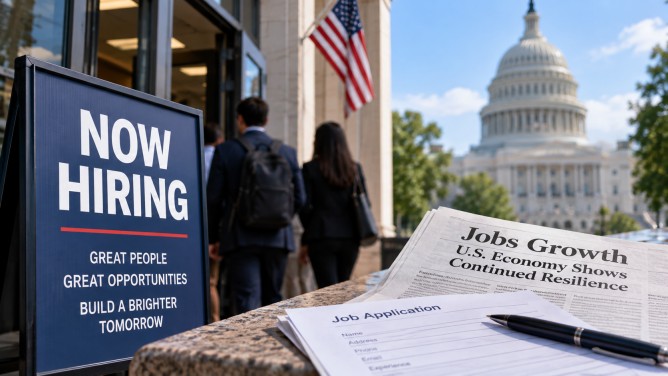
The U.S. labor market showed signs of recovery in August as 162,000 jobs were added, although the unemployment rate held steady at 4.1%. This uptick follows a challenging summer for job growth, with recent months experiencing significant fluctuations. For instance, March saw 214,000 new jobs, but the pace dwindled to a mere 21,000 in July. August’s numbers surpassed economists’ expectations, who had anticipated at least 50,000 new jobs during the month.
Revisions to previous months’ data also offer a slightly more positive outlook. June’s job growth was adjusted from 20,000 to 31,000, and July’s figures shifted from an initial report of a 23,000-job loss to a gain of 21,000 jobs. Nonetheless, the labor market’s momentum appears to be slowing. In August, the private sector added just 38,000 jobs, highlighting a cautious approach by businesses towards hiring.
The labor market is currently characterized by what economists describe as a “slow hire, slow fire” scenario. Companies are not rapidly expanding their workforce nor are they engaging in significant layoffs. The number of job openings and layoffs remained relatively unchanged in July, while the rate of voluntary job departures among workers stayed flat, indicating a lack of confidence in finding new employment opportunities.
This labor market dynamic is compounded by ongoing inflationary pressures. U.S. inflation climbed from 2.4% in February to 3.4% in July, posing additional financial challenges for households due to rising prices. Concurrently, the increase in bond yields has raised concerns over borrowing costs, as higher Treasury yields can lead to more costly mortgages, car loans, and student debt.
The Federal Reserve faces the challenge of balancing inflation control with employment support. While raising interest rates could help bring inflation closer to the 2% target, it risks further slowing an already tepid labor market. Amidst this backdrop, President Donald Trump has advocated for lower interest rates, suggesting that cheaper borrowing could bolster the U.S. economy.