
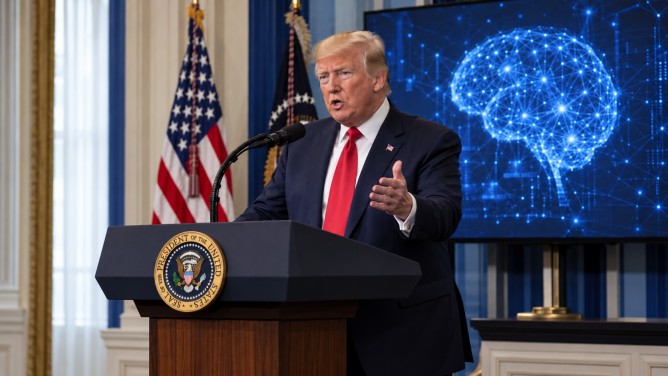
US President Donald Trump has initiated a new task force, the “Super Intelligence Force,” aimed at coordinating federal artificial intelligence (AI) policy and evaluating risks associated with advanced AI technologies. Led by National Intelligence Director Jay Clayton, this initiative underscores the administration’s focus on maintaining US technological leadership while addressing emerging security concerns.
The task force is set to examine potential AI-related risks across various sectors, including financial services, energy, transportation, agriculture, and emergency services. Additionally, its purview extends to addressing concerns in cybersecurity, biosecurity, water infrastructure, and civil liberties while ensuring safeguards for advanced AI systems. Several federal agencies, such as the Pentagon, Justice Department, Department of Homeland Security, and Federal Trade Commission, are anticipated to contribute to the task force’s efforts.
According to the task force’s charter, the group has 120 days to present recommendations to President Trump on AI risks, establish security standards, and assess the potential consequences of excessive regulation. An important aspect of their mandate includes evaluating whether AI laboratories should be required to report security breaches, hacking incidents, and attempts to bypass system safeguards.
Clayton will chair the task force, with FTC Chairman Andrew Ferguson, Undersecretary of Defense for Research and Engineering Emil Michael, and Office of Personnel Management Director Scott Kupor serving as vice chairs. Vice President JD Vance and Defense Secretary Pete Hegseth are among its members, while former AI adviser David Sacks and former Secretary of State Condoleezza Rice are named as external participants.
Despite the administration’s efforts, the initiative has drawn criticism from Democratic lawmakers. Concerns have been raised regarding whether the task force can deliver enforceable protections without congressional involvement. Nonetheless, the administration maintains that AI oversight should effectively address security and public safety risks without stifling technological innovation.