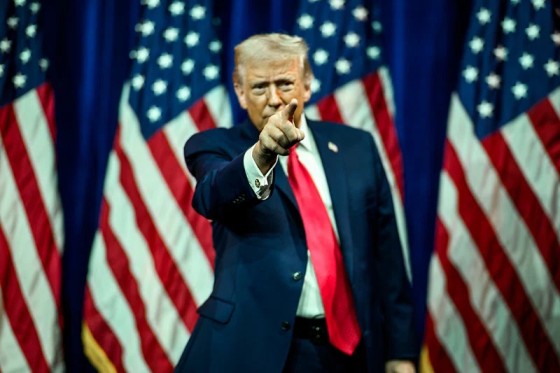
President Donald Trump issued a stern warning to Oman, stating that the United States would respond decisively if the Gulf nation supported attempts to regulate access through the Strait of Hormuz, a vital route for global oil shipments. Trump’s comments were made during a cabinet meeting, where he emphasized that the strait must remain accessible to all and that no country would be permitted to control it.
The President’s remarks followed reports of discussions between Iran and Oman about potentially imposing transit tolls on ships navigating this strategically important corridor. Trump assured that the United States would continue to monitor the Strait of Hormuz closely, ensuring the freedom of navigation in this critical area. He further cautioned Oman with a controversial comment, asserting that the country “will behave just like everybody else” and warning of severe repercussions if it failed to comply.
The Strait of Hormuz is a crucial chokepoint through which nearly 20% of the world’s oil supply is transported. Recent tensions have exacerbated disruptions in the region, particularly following the escalation of the US-Israel conflict with Iran, heightening global concerns over energy security and regional stability.
Oman has historically served as a mediator in regional conflicts and diplomatic engagements involving Iran and Western nations, maintaining its role as a longstanding ally of the United States. Despite this, the situation has stirred apprehensions about potential shifts in Oman’s diplomatic stance amidst the ongoing geopolitical tensions.
Additionally, President Trump accused Iran of stalling current negotiations, suggesting that Tehran is biding its time in anticipation of political changes in the United States as the midterm elections approach. This assertion underscores the complex dynamics at play in the region, as various actors navigate the evolving geopolitical landscape.