
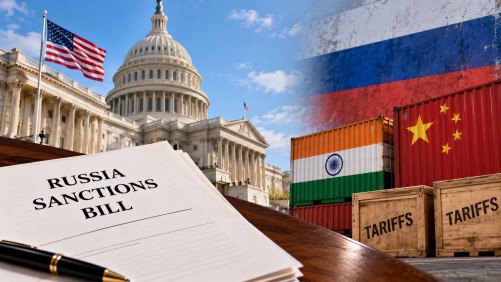
The U.S. House of Representatives has approved the Lindsey O. Graham Sanctioning Russia and Iran Act of 2026, granting President Donald Trump the power to impose hefty tariffs on nations purchasing Russian oil and natural gas. The bill, which passed with a 262-159 vote, had already cleared the Senate and now awaits the President’s decision.
Designed to target Russia’s energy and defense sectors, this legislation allows for tariffs of up to 100% on goods from countries linked to Russian energy purchases or those evading sanctions. While the act does not automatically enforce these tariffs, it provides the President with the authority to do so under specified criteria, potentially impacting countries like India and China, both significant buyers of Russian energy.
The Indian Ministry of External Affairs has emphasized that the country’s energy decisions hinge on national interests, highlighting the potential for these tariff measures to complicate ongoing US-India trade negotiations. As the U.S. seeks to limit Russia’s economic reach, these proposed tariffs could introduce new dynamics into international trade relations.
Beyond targeting Russian energy activities, the bill also extends sanctions on Iran and introduces further measures against Russian officials and financial institutions involved in circumventing existing sanctions. This comprehensive approach underscores the U.S. commitment to tightening economic pressures on both Russia and Iran amidst ongoing geopolitical tensions.