
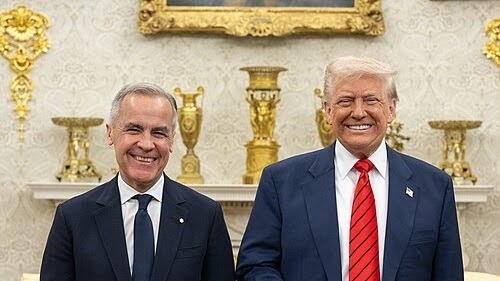
In response to a controversial remark from U.S. President Donald Trump, Canadian Prime Minister Mark Carney has decided against expelling the U.S. ambassador. The issue arose after the ambassador circulated Trump’s social media comment characterizing Canada as the “51st state,” following discussions about Canada’s economic slowdown. This has sparked criticism within Canada and reignited debates over Trump’s repeated references to the nation in a similar vein.
Prime Minister Carney addressed the situation by stressing the importance of maintaining diplomatic relations with the United States, which remains Canada’s largest trading and security ally, despite any disagreements. He underscored Canada’s commitment to working harmoniously with the current U.S. administration. Meanwhile, Canadian opposition leader Pierre Poilievre dismissed Trump’s comments as unrealistic, emphasizing that Canada is not and will not become a part of the United States. Poilievre advised that Canadian efforts should be focused on addressing domestic economic challenges impacting families.
The U.S. ambassador, who has faced calls for his removal through a growing public petition, has previously attempted to downplay the significance of Trump’s “51st state” comments. He has encouraged Canadians to focus on mutual areas of cooperation between the two nations instead. Nevertheless, the remark has fueled controversy as talks about the future of the Canada-U.S.-Mexico free trade agreement continue.
Amidst these tensions, Canadian officials remain engaged in trade negotiations with the United States, reaffirming their dedication to not letting Trump’s social media comments interfere with ongoing discussions and bilateral cooperation. Canadian leaders have made it clear that their focus will remain on achieving productive outcomes in these crucial international agreements.