
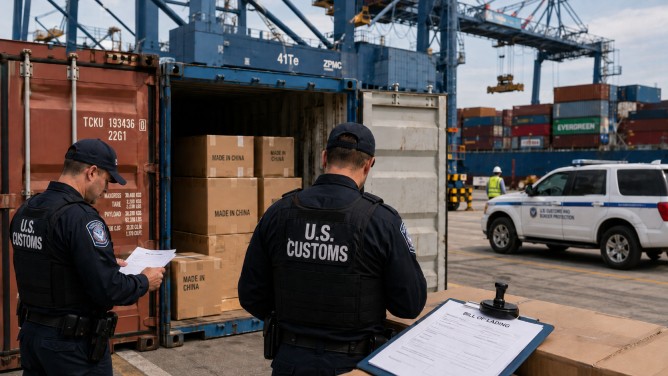
The United States has identified a network of 38 countries and the European Union that it claims are involved in a “shadow transshipment network,” enabling Chinese goods subject to high tariffs to reach the US market through intermediary nations. This assertion is detailed in a report titled “The Great Transshipment Scam,” which estimates these activities could be valued at approximately $60 billion. The report suggests that this alleged practice has led to considerable losses in US tariff revenue.
The countries and territories cited in the report include a diverse group such as India, Canada, the European Union, Israel, Japan, Mexico, South Korea, Taiwan, Brazil, Indonesia, Malaysia, Thailand, Turkey, Vietnam, Argentina, and several others across different continents. According to the findings, about $67 billion worth of goods destined for the US were reportedly rerouted from China through significant hubs like Mexico, India, and Vietnam in 2025. This activity is believed to have resulted in an estimated $28 billion loss in US tariff revenue.
One specific area highlighted in the report is the Pune-Gujarat-Chennai corridor in India. It claims that Chinese shipments of items like electric pumps and compressors have not only benefited businesses along this corridor but have also heightened competitive pressures on US manufacturers. This aspect underscores the broader economic implications of the alleged transshipment practices.
In response to these findings, the US is considering a series of measures to address and mitigate these activities. Proposed actions include implementing stricter inspections and interdiction processes, imposing additional tariffs, enacting sanctions, and potentially restricting market access for countries that are found to facilitate tariff evasion. These steps reflect the seriousness with which the US is approaching the issue.